BLOG
Robotic Automation in Complex Part Picking Operations: The Future of 3D Bin Picking
The Challenge of Picking Parts from Deep Bins
Sorting randomly placed parts from boxes or containers on production and logistics lines may seem easy for humans, but it is an extremely complex problem for robots.
Irregular geometry, reflective surfaces, interlocking parts, and shadowed areas prevent classical 2D imaging systems from producing accurate results.
This leads to line stoppages, collisions, and serious efficiency losses.
3D bin picking steps in at exactly this point, transforming robots into systems that "see and decide."
3D Vision: Understanding the True Depth of Objects
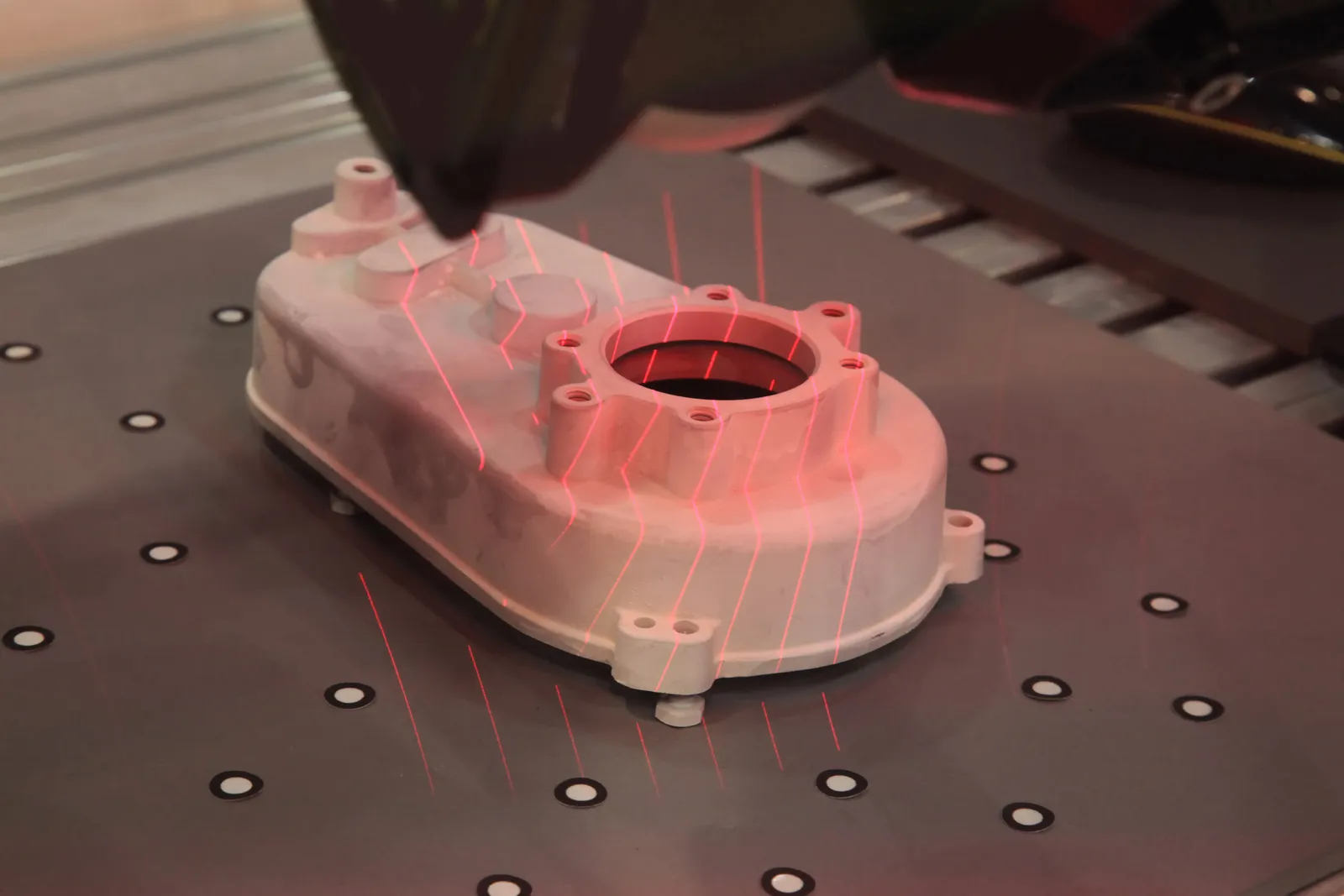
3D camera technology can detect the position, angle, and depth of each part with millimetric accuracy.
This way, the robot analyzes the complex structure inside the bin three-dimensionally and determines the optimal picking strategy by calculating collision risk.
Modern 3D vision solutions deliver reliable results even:
- On highly reflective surfaces,
- On thin and metallic structures,
- On parts that are touching and interlocking.
AI-Powered Path Planning
Just seeing is not enough; the robot needs to "learn" how to move.
AI algorithms evaluate hundreds of different motion paths from which the robot can pick a part without collision, selecting the safest one.
As a result, operations achieve:
- Shorter part picking times,
- Fewer mis-pick errors,
- Uninterrupted production flow.
In systems like MIS-PICK®, this AI engine can provide optimization on its own without requiring robot programming.
Industrial Use Cases Are Expanding
3D bin picking is rapidly becoming widespread across many sectors:
- Automotive: Valves, fasteners, engine parts
- Logistics: Product sorting from bins, depalletizing
- Metal Processing: Irregularly cast parts
- Food and Packaging: Box arrangement, package picking
In these applications, the measure of performance is not just speed, but also consistency and quality.
Industry 5.0 Perspective: Flexible Manufacturing
3D bin picking is a critical element for factories to achieve their flexible manufacturing goals.
Robots can detect new product types without writing separate programs for each batch; this offers a flexible automation model to all businesses from small manufacturers to large-scale facilities.
With its data-driven nature, the 3D vision + AI combination not only automates production but makes it measurable and optimizable at every stage.
Conclusion: 3D Bin Picking Will Be the Future Standard
Success in complex part picking operations now comes not from the robot's speed, but from its vision and decision-making capability.
3D bin picking, with AI-powered analysis and high-resolution 3D sensors, is redefining the efficiency and accuracy standards in industry.