BLOG
AI-Powered Quality Control: Unlocking Its True Potential Through Proper Implementation
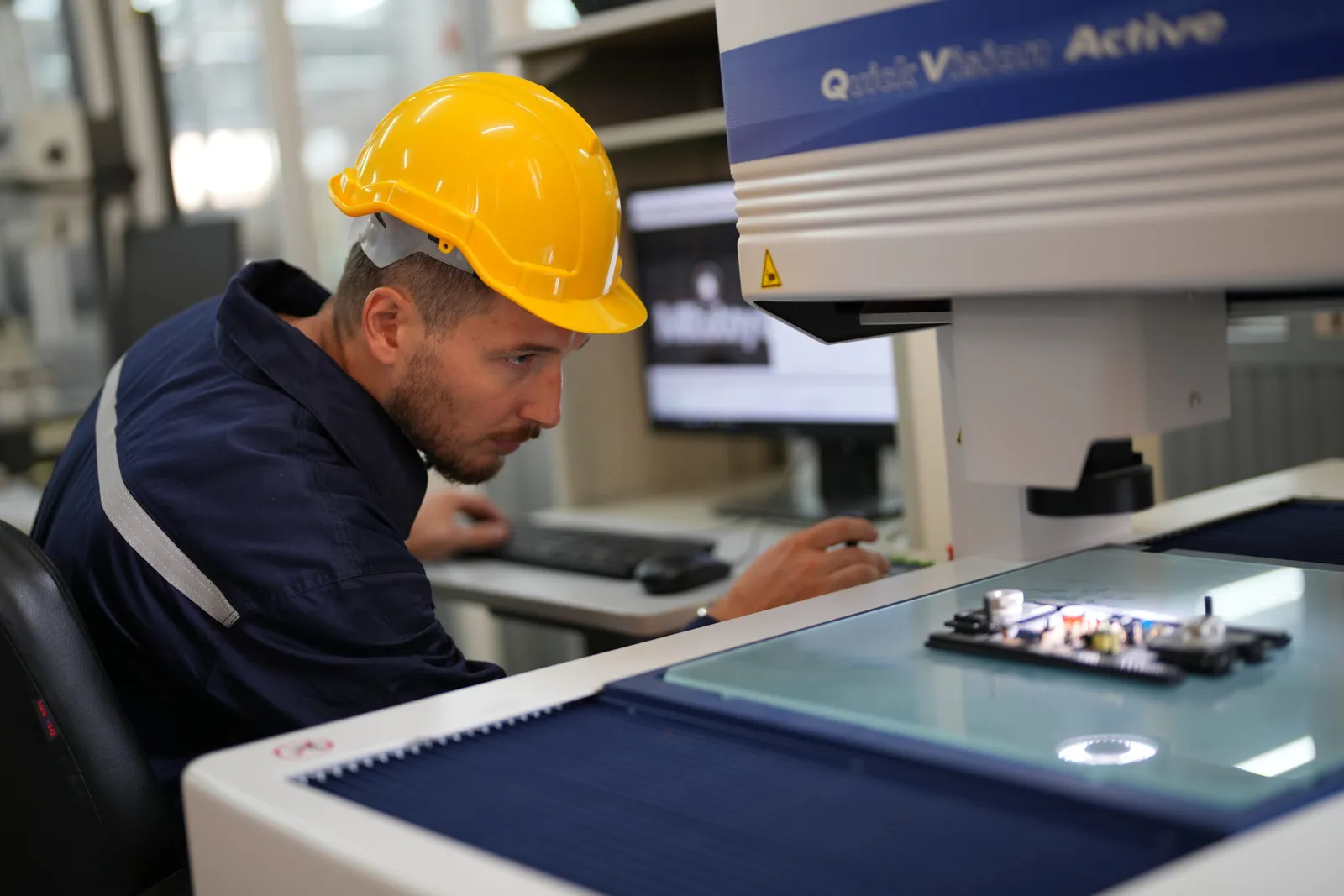
AI-powered quality control systems offer significant advantages in terms of speed and consistency in manufacturing. However, the true potential of these systems emerges when they are properly designed and fed with the right data.
What Does AI Deliver in Quality Control?
Traditional quality control methods rely on operator experience and fixed rules. AI-powered image processing systems can learn variable production conditions, adapt to different product variations, and detect details that the human eye misses.
This enables production lines to achieve:
- Higher speed,
- More consistent quality,
- Lower operator dependency.
Algorithm Success Depends on Data
The performance of AI-powered quality control systems is directly related to the quality of the dataset used.
Models trained with clear, accurately labeled images that represent production perform much more stably in the field.
When different lighting conditions, surface variety, and real production scenarios are properly conveyed to the model, the system can distinguish not only defects but also acceptable tolerances.
This approach prevents unnecessary stoppages in production.
Lighting, Camera, and Optics Alignment Play a Critical Role
AI software alone is not sufficient. Camera resolution, lens selection, and lighting design are determining factors in the model's ability to make correct decisions.
A system fed with the right lighting can achieve higher accuracy rates with less data.
Therefore, in successful projects, image processing is designed as a holistic structure where software, hardware, and process knowledge are addressed together.
Continuity Is Ensured Through Adaptive Models
Modern AI-powered quality control systems have structures that can update themselves over time and adapt to new production conditions.
When new products, different surfaces, or process changes are added to the system in a controlled manner, model performance is maintained.
This flexibility transforms quality control from a static checkpoint into a live decision support mechanism.
Conclusion: AI Is a Tool That Creates Value with Proper Design
AI-powered quality control systems, when properly designed, provide a significant competitive advantage in manufacturing.
Success emerges in projects that address the algorithm, imaging infrastructure, and production knowledge together.
A properly designed system does not slow down production; on the contrary, it makes it smarter, more predictable, and more sustainable.